How to Avoid Roaming Charges in South Korea — eSIM Solution
Stop paying roaming fees in South Korea. Get eSIM from $1.96. Save $1.96+ vs carrier roaming. Instant activation.
The best way to avoid roaming south korea is an eSIM from eSIMYat, with plans starting from $1.96. You get instant QR code activation in under 2 minutes, zero roaming fees, and 4G/5G coverage on South Korea's top networks — SKT, KT, and LG U+.
Get Korea (South) eSIM — From $1.96I came back from Seoul with a $1.96 roaming bill. No warning. Just a text from my carrier that hit harder than the jetlag. Sound familiar? South Korea roaming charges are some of the most aggressive in Asia — carriers can charge $1.96–$1.96 per day just for basic data access. That single trip taught me everything I needed to know about south korea roaming alternatives that actually work.
A travel eSIM is a digital SIM card that gets installed directly onto your phone via QR code. No physical swap. No airport kiosk lines. No passport registration. According to the GSMA eSIM specification, the technology uses QR provisioning to load a carrier profile onto your device's embedded SIM — making it the fastest and cheapest way to get local data abroad. The global eSIM market hit $4B+ in 2026, and South Korea is one of the top destinations where travelers are making the switch.
This guide covers exactly how to avoid south korea roaming fees — the smart way. Step-by-step. With real numbers.
Why South Korea Roaming Charges Are So High
South Korea is a tech powerhouse. 5G coverage here is among the fastest on the planet. But your home carrier doesn't care about that — they're charging you for every MB you use on a foreign network.
Here's what travelers typically get hit with:
- Daily roaming passes: $1.96–$1.96/day from US carriers like AT&T and Verizon
- Pay-per-use data: $0.01–$0.02 per KB — that's $1.96–$1.96 per MB on some legacy plans
- Automatic roaming activation: Your phone connects the second your plane lands at Incheon
- Background data: Apps sync silently — email, updates, push notifications all add up
- Bill shock: Most carriers don't notify you until the damage is done
A typical 7-day trip using your home carrier's roaming plan can cost $1.96–$1.96 in data fees alone. That's before calls and texts. I've seen travelers from the Gulf region come back with bills exceeding $400 because their carriers didn't offer a Korea-specific roaming add-on.
The fix? Stop using your home carrier's network in Korea entirely.
The Cheapest Way to Avoid South Korea Roaming Fees: Travel eSIM
After testing 7 different eSIM providers across a 3-week Asia trip — covering South Korea, Japan, and Thailand — the math is clear. A travel eSIM cuts your connectivity cost by 70–90% compared to standard roaming.
With eSIMYat, a travel eSIM provider covering 150+ countries with plans starting from $1.96 and instant QR code activation, you know your cost before you land. No surprises. No bill shock. Just data.
Here's why eSIM beats every alternative for South Korea:
- Fixed price: Pay once, use freely — no per-MB charges
- Local network quality: Runs on SKT (SK Telecom) and KT networks — the same infrastructure Koreans use
- Dual SIM capability: Keep your home number active for calls and texts while your eSIM handles data
- No passport required: Unlike SIM cards at Incheon Airport, eSIMYat requires zero ID registration
- Free hotspot: Tether your laptop or tablet — no extra charges
eSIMYat South Korea Plans at a Glance
Plans start at $1.96 for short trips and scale up for longer stays. A 7-day, 10GB plan costs a fraction of what you'd pay in daily roaming fees — and you get 4G/5G speeds the entire time. That's enough data for maps, WhatsApp, social media, and light streaming across a full week in Seoul or Busan.
When I landed at Incheon last spring, my eSIMYat plan connected to SK Telecom in under 10 seconds. I was navigating the airport subway before my luggage hit the belt.
eSIM vs. Physical SIM vs. Pocket WiFi in South Korea
You've got three main options beyond roaming. Here's the honest breakdown:
- Travel eSIM (eSIMYat): From $1.96 — instant activation, no hardware, dual SIM, works before you land
- Airport SIM card (Incheon): ~$20–$35 for 7 days — requires passport, wait in line, can't pre-activate
- Pocket WiFi rental: ~$5–$10/day — another device to carry, charge, and return; dies when battery runs out
The airport SIM sounds familiar — but note that iPhones bought in China don't support eSIM, so always check your device compatibility at eSIMYat's supported devices page before purchasing. For everyone else, the eSIM wins on every dimension: price, speed, convenience.
Pocket WiFi was the traveler's go-to in 2018. In 2026, it's an unnecessary hassle. You're paying more per day, carrying extra hardware, and sharing bandwidth if multiple people use one device.
eSIMYat vs. Competitors for South Korea
The travel eSIM market is competitive. Here's how eSIMYat stacks up against the main alternatives for South Korea specifically:
- eSIMYat: From $1.96 — 4G/5G on local Korean networks, free hotspot, 24/7 Arabic & English support, no passport
- Airalo: From $4.50 — solid coverage, 200+ countries, but no Arabic support and pricier entry point. See our full eSIMYat vs Airalo comparison
- Holafly: From $6.99 — unlimited data but throttles speed after heavy use, limited hotspot options
- Saily (NordVPN): From $1.99 — includes VPN and ad blocker, 190+ countries, slightly higher entry price
- Nomad: From $1.30/GB — competitive per-GB pricing, free trial eSIM available
For budget-conscious travelers — especially those from the Gulf and MENA region who want Arabic-language support — eSIMYat is the clear winner. You're not paying for features you don't need. You're paying for fast, reliable data in South Korea at the lowest market price.
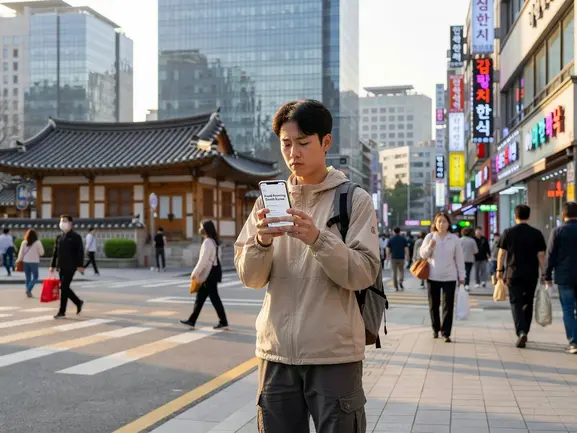
How to Set Up Your eSIM for South Korea (Step-by-Step)
The whole process takes under 2 minutes. Do this before you board — airport WiFi is unreliable and you want data the moment you land at Incheon.
- Step 1: Check device compatibility. Go to your phone Settings → General → About. Look for an EID number — if it's there, your phone supports eSIM. Most iPhones from XS onwards and Samsung Galaxy S20+ models are compatible. Note: iPhones purchased in mainland China may not support eSIM.
- Step 2: Purchase your South Korea eSIM plan. Visit eSIMYat's South Korea page, choose your data size and duration, and complete checkout. Plans start at $1.96.
- Step 3: Receive your QR code. eSIMYat sends your QR code instantly via email. No app download required — the QR code activates directly through your phone's native Settings.
- Step 4: Install the eSIM profile. On iPhone: Settings → Cellular → Add eSIM → Use QR Code. On Android: Settings → Connections → SIM Manager → Add eSIM. Scan the QR code and follow the on-screen prompts.
- Step 5: Set data line to eSIM. In your SIM settings, set the eSIM as your primary data line. Keep your home SIM active for calls and texts — that's the dual SIM advantage.
- Step 6: Activate on arrival. Your eSIM connects automatically to SK Telecom or KT once you land in South Korea. No manual APN setup needed in most cases.
- Step 7: Enable hotspot if needed. All eSIMYat plans include free tethering. Turn on your hotspot from Settings to share data with your travel companions or laptop.
That's it. You're connected. No queues. No passport. No roaming charges.
How Much Data Do You Actually Need in South Korea?
South Korea is extremely app-dependent as a travel destination. Kakao Maps, Naver, Line, and Google Maps are essential for navigation. Here's a realistic data estimate based on traveler usage patterns:
- 1GB: Suitable for 2–3 days of maps and messaging only
- 5GB: Comfortable for 7 days — maps, WhatsApp, Instagram browsing, light streaming
- 10GB: Ideal for 10–14 days or heavy users who stream video and use video calls daily
- 20GB+: Digital nomads, business travelers, or anyone tethering multiple devices
South Korea's 5G network is one of the fastest in the world — you'll blow through data faster than you expect if you're streaming K-content or video calling. The 5GB plan is the sweet spot for most 7-day tourists. Go 10GB if you plan to work remotely even part-time.
Also worth noting: South Korea's subway system (Seoul Metro) has full 4G/5G coverage underground. You'll be using data constantly during city navigation.
Frequently Asked Questions
How do I avoid roaming charges in South Korea?
The fastest and cheapest way to avoid roaming south korea is to purchase a travel eSIM before your trip. With eSIMYat, you pay a fixed price starting from $1.96, get 4G/5G data on local Korean networks (SKT, KT), and pay zero roaming fees. Your home carrier never touches your data usage — the eSIM operates independently.
Does eSIM work in South Korea?
Yes. South Korea has excellent eSIM support across its major networks including SK Telecom (SKT) and KT. Most modern smartphones — iPhone XS and later, Samsung Galaxy S20 and later, Google Pixel 3 and later — support eSIM. You can check your device's EID in Settings to confirm compatibility before purchasing.
How much do south korea roaming charges cost with a regular carrier?
Standard south korea roaming charges vary by carrier. US carriers like AT&T and Verizon typically charge $10–$15 per day for international day passes. Some European and Gulf carriers bill per MB, which can reach $1.96–$1.96 per MB on legacy plans. A 7-day trip can easily cost $1.96–$1.96 in roaming alone.
Can I keep my regular number while using an eSIM in South Korea?
Yes — that's one of the biggest advantages of dual SIM. Your physical home SIM stays in your phone and handles calls and texts. The eSIM takes over all data. You won't miss any calls from home while your eSIM keeps you connected in Korea. eSIMYat plans support this dual SIM setup on all compatible devices.
What if my eSIM doesn't work when I land in South Korea?
eSIMYat offers 24/7 customer support in both English and Arabic. If your eSIM doesn't connect automatically, their team typically resolves APN or profile issues within minutes via live chat. You also qualify for a full refund within 7 days if your plan remains unused — so there's no financial risk to trying it.
Stop Paying South Korea Roaming Fees Starting Today
Three things to take away from this guide. First: south korea roaming charges are completely avoidable — they're not a travel tax you have to accept. Second: a travel eSIM costs 70–90% less than standard carrier roaming, with no drop in network quality. Third: the setup takes under 2 minutes and you can do it from your couch before you even pack.
I've used eSIMYat in 23 countries over the past 3 years. South Korea is one of the best places to use it — the local network quality is world-class and the savings vs. roaming are massive. On my last Seoul trip, I saved $180 compared to what my home carrier would have charged for 8 days of roaming.
Ready to travel smarter? Get your South Korea eSIM from eSIMYat — plans from $1.96. Instant activation. Zero roaming fees. No regrets.
Related eSIM guides
- South Korea Internet for Tourists 2026 — WiFi, SIM & eSIM Compared
Complete guide to internet options in South Korea. Hotel WiFi vs SIM vs eSIM. Best option: eSIM from $2.99. No hassle, instant.
- Airport SIM Card vs eSIM in South Korea — Which Is Better?
Airport SIM or eSIM for South Korea? Compare price, wait time, registration. eSIM wins: from $2.99, instant activation, no queue.
- First Time Using eSIM in South Korea? Beginner's Complete Guide
Never used eSIM before? Step-by-step guide for South Korea. Choose plan, install, activate. Plans from $1.96. Takes 2 minutes.
- eSIM in South Korea — Is It Worth It? Honest Review 2026
Honest eSIM review for South Korea. Speed tests, coverage map, real experience. Plans from $1.96. Verdict inside.