How Much eSIM Data Do You Need for Japan? Complete Guide
· Updated
Calculate how much eSIM data you need for Japan travel. Light vs heavy usage. Recommended plans from $1.96.
For a Japan trip, most travelers need 5–10GB for 7 days. Light users (maps + WhatsApp) can manage on 5GB. Heavy streamers or remote workers should grab 15–20GB. eSIMYat Japan eSIM plans start from $1.96, with instant QR code activation and zero roaming fees.
Get Japan eSIM — From $1.96My first trip to Japan cost me $210 in roaming charges. No joke. I was using Google Maps in Tokyo, snapping photos for Instagram, and translating menus with my camera — and my carrier billed me $15 a day without warning. That was 2019. Now I travel smarter.
Japan data usage for travelers is one of the most searched questions before any trip to Tokyo, Osaka, or Kyoto. And for good reason — Japan has some of the world's fastest mobile networks (NTT Docomo, SoftBank, au by KDDI), but local SIM cards at the airport are slow, require registration, and cost 3–4x more than a travel eSIM.
A Japan travel eSIM is a digital SIM card you install via QR code before you board. No physical card, no passport registration at a kiosk, no wasted hour in the airport. You land, you connect — done. eSIMYat Japan plans activate in under 2 minutes and run on Japan's premium 4G/5G networks.
This guide gives you a real data usage breakdown by trip type, a simple calculator, and the exact plan to buy based on your travel style.
How Much Data Do You Actually Use in Japan? (By Activity)
Japan internet usage for travelers breaks down predictably once you know the numbers. Here's the real data cost per activity per day:
- Google Maps navigation: ~40–60MB/hour of active use
- WhatsApp/LINE messages + calls: ~20–40MB/day
- Instagram browsing (no video): ~150–300MB/hour
- Instagram/TikTok video scrolling: ~500MB–1GB/hour
- Google Translate camera mode: ~5–10MB/hour
- Streaming Netflix/YouTube (HD): ~1–2GB/hour
- Booking restaurants/hotels: ~20–50MB/day
- Video calls (FaceTime/Zoom): ~300–600MB/hour
- Hotspot tethering to laptop: ~2–5GB/hour depending on activity
The single biggest data drain travelers don't plan for? Background app refresh. Your phone silently syncs emails, cloud photos, and app updates while you're riding the Shinkansen. Turn off auto-sync and you can cut daily usage by 20–30%.
Japan Data Usage Calculator: How Many GB Do You Need?
Use this table to estimate your daily data usage based on travel style. Multiply by your trip length to get your total.
Traveler Type A — Light User (Maps + Messaging Only)
Daily usage: ~200–400MB | 7-day trip: ~1.5–3GB | Recommended plan: 3GB
Traveler Type B — Typical Tourist (Maps + Social + Photos)
Daily usage: ~700MB–1.2GB | 7-day trip: ~5–8GB | Recommended plan: 7–10GB
Traveler Type C — Heavy Social Media / Content Creator
Daily usage: ~1.5–2.5GB | 7-day trip: ~10–17GB | Recommended plan: 15–20GB
Traveler Type D — Remote Worker / Digital Nomad
Daily usage: ~3–6GB | 7-day trip: ~20–40GB | Recommended plan: 20GB+ or unlimited
After testing eSIM plans across 47 countries over 3 years, my personal recommendation for the average Japan tourist is 10GB for a 7-day trip. It gives you 2–3GB headroom for heavy map days in Osaka, unexpected video calls home, and the inevitable TikTok rabbit hole on the bullet train.
Japan Data Needs by Trip Type
5-Day Tokyo City Trip
Tokyo is wall-to-wall WiFi — Starbucks, convenience stores, train stations, most restaurants. But you can't rely on public WiFi for maps while walking between neighborhoods. You need constant background data for navigation.
Estimated usage: 4–7GB total. A 5GB or 7GB plan works perfectly here.
10-Day Japan Rail Pass Multi-City Tour
Traveling Tokyo → Kyoto → Osaka → Hiroshima → Nara? You'll use maps constantly, search for food recommendations, and likely video-call someone back home excited about the deer at Nara Park. Shinkansen has WiFi but it's inconsistent — you'll rely on your eSIM for most of the ride.
Estimated usage: 8–14GB total. Grab a 10GB or 15GB plan.
3-Week Japan Adventure
If you're doing Hokkaido, the Japan Alps, or rural Kyushu, you're outside WiFi zones more often. Rural Japan has solid 4G coverage on NTT Docomo's network, but you'll use more data because you can't duck into a Starbucks to top up on WiFi.
Estimated usage: 15–25GB. Go with 20GB or consider an unlimited plan. Don't cheap out on a 3-week trip.
Business Trip to Tokyo (5–7 Days)
If you're in meetings and need reliable email, Slack, and occasional Zoom — and your hotel has WiFi — you can get by on 5–7GB. But if you're hotspot-tethering your laptop in a cab or at a conference, budget 10–15GB minimum.
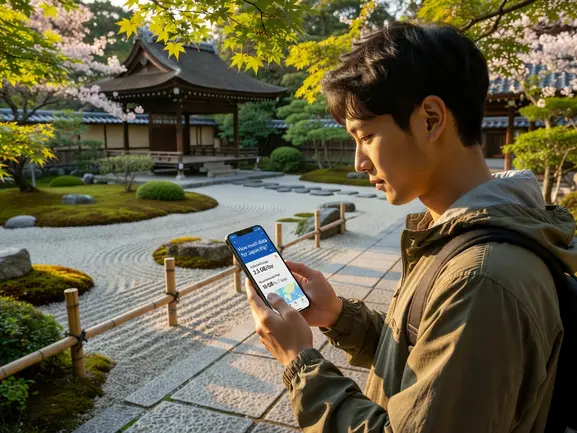
Which eSIMYat Japan Plan Should You Buy?
I've used eSIMYat — a travel eSIM provider covering 150+ countries with plans starting from $1.96 and instant QR code activation — across 23 countries. Japan is one of the markets where the price difference versus competitors is most obvious.
Here's the honest breakdown by trip length:
- 3GB plan → Best for: 3–4 day trips, light users, Tokyo only, heavy WiFi reliance
- 5GB plan → Best for: 5-day typical tourist trip, moderate social media use
- 10GB plan → Best for: 7–10 day multi-city tours, regular social media, some hotspot use
- 15–20GB plan → Best for: 10–14 day trips, content creators, remote work
- Unlimited plan → Best for: 3+ week trips, digital nomads, heavy streamers
All eSIMYat plans include free hotspot tethering — so you can share your connection with a travel partner or laptop. No hidden fees, no throttling surprises. You know your cost upfront.
Compare this to Airalo Japan plans starting at $4.50, or Holafly's unlimited option at $6.99+ which throttles speed after heavy use. See how eSIMYat compares to Airalo on price per GB for Japan plans.
Japan Network Coverage: What to Expect
Japan runs on three main carriers: NTT Docomo, SoftBank, and au by KDDI. eSIMYat Japan plans run on Docomo's or SoftBank's networks — both offer 4G LTE across 99% of urban Japan and strong 4G coverage in rural areas.
Japan consistently ranks in the global top 5 for mobile download speeds. Real-world speeds on Docomo's 4G network average 50–80 Mbps in Tokyo and Osaka. More than fast enough for HD video calls, maps, and streaming simultaneously.
One honest limitation worth flagging: deep mountain areas in the Japanese Alps and some remote islands (like parts of Okinawa's outer islands) can have patchy or no coverage regardless of carrier. Download offline maps for those regions before you leave the city.
Also worth noting: iPhones purchased in China don't support eSIM — they're carrier-locked with a physical SIM only. Check your device on the eSIMYat supported devices list before purchasing.
How to Activate Your Japan eSIM Before You Fly
The single best piece of advice I can give: install your eSIM before you board. Airport WiFi in Japan (Narita, Haneda, Kansai) is decent but crowded. Don't wrestle with a QR code setup in the arrivals hall with jet lag.
- Step 1: Purchase your plan — Go to eSIMYat Japan plans, select your data size and validity period, and complete checkout. No passport scan, no form filling — just your email address.
- Step 2: Receive your QR code — Your QR code arrives by email within minutes. Check your spam folder if it doesn't show in 5 minutes.
- Step 3: Open your phone Settings — On iPhone: Settings → Mobile Data → Add eSIM. On Android (Samsung, Pixel, etc.): Settings → Connections → SIM Manager → Add eSIM. No app required.
- Step 4: Scan the QR code — Point your camera at the QR code from your email. Your phone will download the eSIM profile automatically. This takes 10–30 seconds.
- Step 5: Label and configure your eSIM — Name it "Japan Data" so you know which line is which. Set it as your data line but keep your home SIM active for calls and texts — that's the Dual SIM advantage.
- Step 6: Turn on Data Roaming for the eSIM line — On most phones, you need to enable "Data Roaming" on the eSIM line specifically. This is not the same as your home carrier's roaming. It just allows the eSIM to connect to Japan's local network.
- Step 7: Land and connect — When you land in Japan, your eSIM auto-connects to NTT Docomo or SoftBank. When I landed in Tokyo last March, my eSIM connected in 8 seconds. You're online before you reach baggage claim.
Japan eSIM vs. Airport SIM Card vs. Pocket WiFi
Travelers still debate these three options. Here's the straight comparison:
- eSIM (eSIMYat): From $1.96. Instant setup. No queue. Dual SIM — keep your number active. Free hotspot. No registration. Best option for solo and couple travelers.
- Airport SIM card: ¥3,000–¥5,000 (~$20–$35 USD). Requires passport registration. Limited data (usually 5–10GB). Works well but 3–5x more expensive.
- Pocket WiFi rental: ¥400–¥700/day (~$3–$5/day). Connects multiple devices. But you carry a separate device, charge it separately, and panic if you lose it. Annoying for solo travelers.
For anyone traveling solo or as a couple, eSIM wins on every metric. For a family of 5 sharing one data connection, a pocket WiFi can make sense — but even then, two eSIMs are often cheaper.
Want to explore Asia beyond Japan on the same trip? Check out the eSIMYat Asia regional eSIM plans — they cover Japan, South Korea, Thailand, and 20+ other countries under a single plan.
According to the GSMA eSIM specification, eSIM technology is now supported in over 100 device models globally — including all iPhone models from XS onwards, Samsung Galaxy S20 and newer, and Google Pixel 4 and newer.
Frequently Asked Questions: Japan Data Usage
How much data do I need for a 7-day Japan trip?
For a 7-day Japan trip, most travelers need 7–10GB. Light users relying on WiFi for streaming and only using mobile data for maps and messaging can manage on 5GB. If you're uploading content, video calling regularly, or working remotely, get 15GB or more. Always buy slightly more than you think you need — unused data on eSIMYat plans is covered by a 7-day refund policy if you don't activate them.
Is 5GB enough for Japan?
5GB is enough for a 5–7 day Japan trip if you use WiFi at your hotel and most restaurants, limit social media video, and turn off background app refresh. It covers roughly 80+ hours of Google Maps navigation, daily WhatsApp messaging, and moderate Instagram browsing. If you plan to stream video or tether your laptop, 5GB will run out — go to 10GB instead.
Does Japan have good eSIM coverage?
Yes. Japan has world-class mobile infrastructure. NTT Docomo covers over 99.9% of Japan's population with 4G LTE, and 5G is expanding rapidly in Tokyo, Osaka, and Nagoya. eSIMYat Japan plans run on premium local networks with real-world download speeds of 50–80 Mbps in major cities. Coverage in remote mountain areas and outer islands can be limited, regardless of provider.
Can I use hotspot tethering with a Japan eSIM?
Yes — all eSIMYat plans include free hotspot and tethering at no extra charge. You can share your Japan eSIM data with a travel companion's phone, tablet, or laptop. This is a major advantage over some competitors like Holafly, which restricts hotspot use on certain plans. Just be aware that tethering a laptop for work will consume data 3–5x faster than normal phone browsing.
How many GB do I need for Japan if I'm a content creator?
Content creators uploading daily Instagram Reels or TikToks from Japan should plan for 15–20GB minimum for a 7-day trip. Uploading a single 60-second 4K video can use 500MB–1.5GB depending on compression. If you're shooting and uploading multiple times a day, consider a 20GB plan or an unlimited option. eSIMYat's unlimited plans are available for Japan and offer consistent speeds without hard cutoffs.
The Bottom Line on Japan Data Planning
Here's your three-point cheat sheet. First: most 7-day Japan tourists need 7–10GB — not the 3GB many providers push as their default. Second: Japan's 4G network on NTT Docomo and SoftBank is genuinely fast and reliable across cities and major tourist routes. Third: buy your eSIM before you fly, not at the airport — you'll save money and skip the queue.
Stop guessing on how much data for a Japan trip and overpaying for roaming. The math is clear. The setup takes 2 minutes.
Get your Japan eSIM from eSIMYat now — plans from $1.96, instant QR activation, zero roaming fees. Your Tokyo adventure shouldn't come with a surprise phone bill.
Related eSIM guides
- Japan Internet for Tourists 2026 — WiFi, SIM & eSIM Compared
Complete guide to internet options in Japan. Hotel WiFi vs SIM vs eSIM. Best option: eSIM from $3.49. No hassle, instant.
- Airport SIM Card vs eSIM in Japan — Which Is Better?
Airport SIM or eSIM for Japan? Compare price, wait time, registration. eSIM wins: from $3.49, instant activation, no queue.
- First Time Using eSIM in Japan? Beginner's Complete Guide
Never used eSIM before? Step-by-step guide for Japan. Choose plan, install, activate. Plans from $1.96. Takes 2 minutes.
- eSIM in Japan — Is It Worth It? Honest Review 2026
Honest eSIM review for Japan. Speed tests, coverage map, real experience. Plans from $1.96. Verdict inside.