How Much eSIM Data Do You Need for Iraq? Complete Guide
· Updated
Calculate how much eSIM data you need for Iraq travel. Light vs heavy usage. Recommended plans from $3.86.
For a typical Iraq trip, you need 3–5 GB for a 7-day stay covering maps, WhatsApp, and social media. Heavy streamers or remote workers need 10–15 GB. The best Iraq eSIM data plan starts from $3.86 on eSIMYat — no passport registration, instant QR code activation.
Get Iraq eSIM — From $3.86My first trip to Baghdad without a local SIM cost me $190 in roaming fees for one week. The second trip, I bought a 10 GB Iraq eSIM before boarding. Total data cost: $8.90. That gap is exactly why figuring out how much data you actually need for an Iraq trip matters before you land.
An Iraq travel eSIM is a digital SIM card provisioned via QR code — no physical swap required. It gives you access to Iraq's 4G LTE networks (Zain Iraq, Asiacell, and Korek Telecom) without touching a SIM tray or visiting an airport kiosk. For anyone planning a trip to Baghdad, Erbil, Basra, or Najaf, the key question is always the same: how much data do I actually need?
This guide breaks it down by trip type, usage behavior, and day count — so you buy exactly the right amount, not a random guess.
How Much Data Does the Average Iraq Traveler Use Per Day?
Most travelers use between 300 MB and 1.5 GB per day in Iraq. That wide range depends entirely on what you're doing on your phone. Maps and WhatsApp alone use maybe 150 MB/day. Add Instagram browsing and a few YouTube shorts and you're at 600 MB. Stream a Netflix episode over data and you've burned 1–3 GB in one sitting.
Here's the real breakdown by activity:
- Google Maps / navigation: 30–60 MB per hour of active use
- WhatsApp calls and messages: 50–80 MB per hour of voice calls; text messages are negligible
- Instagram browsing (30 min): 100–180 MB
- Facebook feed (30 min): 60–120 MB
- YouTube HD streaming (1 hour): 700 MB – 1.5 GB
- Zoom or video call (1 hour): 400–800 MB
- Email + Slack (full day): 30–60 MB
- Google searches and web browsing (1 hour): 50–80 MB
Iraq's 4G coverage is solid in Baghdad, Erbil, Sulaymaniyah, and Basra. Zain Iraq and Asiacell both offer strong urban 4G speeds. However, connectivity in rural governorates — parts of Diyala, Anbar, or remote areas near the Syrian border — can drop to 3G or lose signal entirely. Plan your data around city use; don't count on consistent streaming outside major cities.
Iraq Data Usage Calculator: How Many GB Do You Need?
This is the section most travelers need. Use the trip profiles below to estimate your total iraq data usage before you buy.
Light User (3–5 GB for 7 Days)
You check WhatsApp, use Google Maps to get around, and scroll social media for 20–30 minutes a day. You're sightseeing in Baghdad or doing a religious pilgrimage to Karbala or Najaf — your phone is a tool, not entertainment. 3 GB covers a week comfortably. 5 GB gives you breathing room.
- WhatsApp messages + calls: ~350 MB/week
- Google Maps daily navigation: ~250 MB/week
- Light social media: ~700 MB/week
- Email + web: ~200 MB/week
- Total: ~1.5 GB actual — buy 3 GB for safety buffer
Moderate User (5–10 GB for 7 Days)
You post travel photos on Instagram, make video calls home, use Uber or Careem frequently (which requires constant data), and watch a few YouTube videos at the hotel. This is most international tourists and business travelers to Iraq.
- Social media (Instagram, TikTok, Facebook): ~2 GB/week
- Video calls (2 x 30 min/day): ~1.5 GB/week
- Navigation and apps: ~400 MB/week
- Streaming (1 episode/day at hotel, SD): ~1 GB/week
- Email, browsing, messaging: ~500 MB/week
- Total: ~5.5 GB actual — buy 7–8 GB for comfort
Heavy User / Remote Worker (10–15 GB for 7 Days)
You're on Zoom calls daily, tethering your laptop, and streaming content regularly. Iraq's hotel WiFi can be unreliable — many remote workers I've spoken to rely entirely on their eSIM hotspot as a backup. If that's you, 10 GB is the minimum. Go 15 GB if your work involves video conferencing more than two hours daily.
- Zoom / video conferencing (2 hr/day): ~5.6 GB/week
- Hotspot for laptop browsing: ~2–4 GB/week
- Social media + streaming: ~2 GB/week
- All other apps: ~1 GB/week
- Total: ~11–12 GB actual — buy 15 GB for buffer
Quick Reference Table: How Many GB for Iraq Trip?
- 3-day trip, light use: 1–2 GB
- 5-day trip, light use: 2–3 GB
- 7-day trip, light use: 3–5 GB
- 7-day trip, moderate use: 5–10 GB
- 7-day trip, heavy use / remote work: 10–15 GB
- 14-day trip, moderate use: 10–15 GB
- 14-day trip, heavy use: 20–25 GB
One critical note: if you plan to use your eSIM as a hotspot for a tablet or laptop, multiply your estimate by 1.5x. Laptops consume data fast — a single software update can eat 500 MB without warning.
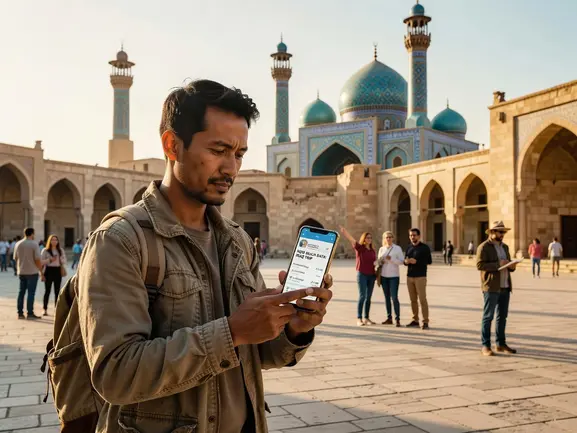
Best Iraq eSIM Data Plans on eSIMYat
After testing eSIM plans across 47 countries over 3 years, I can say with confidence that price and network quality rarely go hand-in-hand — except with eSIMYat, a travel eSIM provider covering 150+ countries with plans starting from $3.86 and instant QR code activation.
Here's what eSIMYat Iraq plans offer:
- Plans from $3.86 — some of the lowest prices in the market
- 4G LTE coverage via Zain Iraq, Asiacell, and Korek Telecom
- Free hotspot/tethering on all plans — share data with your laptop
- Instant QR code activation — live in under 2 minutes
- No passport registration required — unlike airport SIM counters in Baghdad
- Dual SIM support — keep your home number active for calls
- 24/7 support in English and Arabic
- 7-day refund on unused plans
Compare that to Airalo's Iraq plans starting from $4.50 — that's 3x more expensive for the same 4G coverage. Holafly offers unlimited but throttles speeds heavily after moderate use, which is frustrating when you're trying to navigate Baghdad traffic in real time.
For most travelers, the 5 GB or 10 GB eSIMYat Iraq plan hits the sweet spot between cost and coverage. See all current plans on the Iraq eSIM page.
How to Activate Your Iraq eSIM — Step-by-Step
I've installed eSIMs on iPhones, Samsung Galaxy phones, and Google Pixel devices. The process takes under 2 minutes when you do it correctly. The golden rule: install before you board. Airport WiFi in Baghdad International is slow and unreliable.
- Step 1: Check eSIM compatibility. Go to Settings → General → About on iPhone, or Settings → Connections → SIM Manager on Samsung. If you see an "Add eSIM" or "Add Mobile Plan" option, your device is compatible. Note: iPhones purchased in mainland China do not support eSIM.
- Step 2: Purchase your Iraq eSIM plan on eSIMYat. Visit the Iraq eSIM destination page, select your data size and validity period, and complete checkout. No passport or ID required.
- Step 3: Receive your QR code. eSIMYat emails your QR code instantly after purchase — this is the EID profile provisioning link that installs the eSIM onto your device.
- Step 4: Scan the QR code. On iPhone: Settings → Cellular → Add eSIM → Use QR Code. On Android: Settings → Connections → SIM Manager → Add eSIM → Scan QR Code. Point your camera at the code and confirm the installation prompts.
- Step 5: Set data preferences. After installation, go to your cellular settings and set the Iraq eSIM as your data line. Keep your home SIM active for calls and SMS — this is the dual SIM advantage.
- Step 6: Activate on arrival. Your eSIM activates automatically when your plane lands in Iraq and your phone connects to Zain Iraq, Asiacell, or Korek Telecom towers. No store visit needed.
- Step 7: Monitor usage. Check remaining data in Settings → Cellular → Data Usage, or contact eSIMYat's 24/7 support to check your balance if needed.
The entire process — from purchase to active connection — takes under 2 minutes. That's faster than the queue at the SIM card counter in any Iraqi airport.
Iraq Internet Speed: What to Expect
Iraq's mobile internet has improved significantly. Based on Ookla Speedtest data, average 4G download speeds in Baghdad hover around 18–25 Mbps. Erbil and Sulaymaniyah in the Kurdistan Region generally see slightly faster speeds — 25–35 Mbps — due to better infrastructure investment.
Basra has solid 4G coverage in the city center but patchy signals in port areas and industrial zones. Karbala and Najaf, popular for religious tourism, have decent coverage near the holy shrines but can get congested during Arbaeen and Ashura pilgrimages when millions of visitors flood the networks simultaneously.
Practical expectations by city:
- Baghdad: 18–25 Mbps 4G, reliable in central and commercial districts
- Erbil: 25–35 Mbps 4G, among the best in Iraq
- Sulaymaniyah: 20–30 Mbps 4G, consistent urban coverage
- Basra: 15–22 Mbps 4G, variable near the port
- Karbala / Najaf: 12–20 Mbps 4G, congested during pilgrimage seasons
- Rural / Western Anbar: 3G or no signal in remote areas
These speeds are more than sufficient for WhatsApp video calls, Google Maps navigation, and even Netflix at SD quality. For HD streaming, stick to hotel WiFi when available.
Tips to Avoid Running Out of Data in Iraq
I've used eSIMYat in 23 countries — here's what I've learned about making data last longer without cutting into the experience.
- Download offline maps before arrival. Google Maps lets you save Baghdad, Erbil, or any Iraqi city for offline use. This alone saves 200–400 MB per day of active navigation.
- Use WhatsApp over calls for updates. Text messages use near-zero data. Voice notes use ~1 MB per minute. Voice calls use ~1 MB per minute. Video calls use 5–8 MB per minute — avoid those on mobile data.
- Disable auto-play on social apps. Instagram and TikTok auto-play videos silently in the background. Turn off auto-play in settings — it can save 300–600 MB per day.
- Set apps to WiFi-only for updates. App stores update apps automatically over any connection. Go to your phone's app settings and restrict updates to WiFi only.
- Use data compression in Chrome. Chrome's Lite mode reduces data consumption by 30–40% while browsing.
- Buy slightly more than you think you need. eSIMYat plans from $3.86 are cheap enough that buying 10 GB instead of 7 GB costs just a few dollars more — far less than running out mid-trip.
If you're traveling to neighboring countries before or after Iraq, check out the Middle East eSIM regional plans — they cover Iraq plus Jordan, Kuwait, Saudi Arabia, and more in a single plan.
Also worth reading: the best eSIM for Iraq 2026 guide compares all major providers side-by-side with real pricing data.
Frequently Asked Questions About Iraq eSIM Data
How much data do I need for a 7-day Iraq trip?
For a 7-day Iraq trip, light users need 3–5 GB (maps, WhatsApp, light browsing), moderate users need 5–10 GB (social media, video calls, some streaming), and heavy users or remote workers need 10–15 GB. Always add a 20% buffer to your estimate — it's cheaper to have spare data than to top up mid-trip. eSIMYat Iraq plans start from $3.86.
Does eSIMYat work in Iraq?
Yes. eSIMYat provides 4G LTE coverage in Iraq through Zain Iraq, Asiacell, and Korek Telecom — the three main national carriers. Coverage is strong in Baghdad, Erbil, Basra, Karbala, and Najaf. Rural areas in western Anbar and remote border regions may see reduced 3G speeds or limited signal. Activation takes under 2 minutes via QR code.
What is the cheapest way to get data in Iraq as a tourist?
An Iraq travel eSIM from eSIMYat is the cheapest option — plans start from $3.86 with no passport registration, no airport queue, and zero roaming fees. Buying a physical SIM at Baghdad International Airport costs more and requires showing your passport. Your home carrier's international roaming plan typically charges $3.86–15 per day. eSIMYat wins on price by a significant margin.
Can I use my eSIM as a hotspot in Iraq?
Yes. All eSIMYat Iraq plans include free hotspot and tethering — you can share your mobile data connection with a laptop or tablet. This is especially useful for remote workers staying in hotels with unreliable WiFi. If you plan to tether regularly, factor in an extra 2–4 GB per day for laptop use and buy a 10–15 GB plan accordingly.
How much data do I need for the Arbaeen or Karbala pilgrimage?
For a 5–7 day religious visit to Karbala or Najaf for Arbaeen, Ashura, or general pilgrimage, a 5 GB plan is sufficient for most pilgrims — covering maps, WhatsApp family updates, and light browsing. Note that networks get heavily congested during peak pilgrimage seasons when millions gather. Download offline maps in advance and reduce video calls to conserve data when signal is slow.
Bottom Line: How Many GB for Your Iraq Trip?
Here's the simple version. Light traveler on a 7-day trip: buy 3–5 GB. Typical tourist with social media and video calls: buy 7–10 GB. Remote worker relying on hotspot: buy 15 GB minimum. When in doubt, go one size up — eSIMYat's prices are low enough that the extra gigabytes cost less than a coffee.
Three things to remember: download offline maps before you land, disable auto-play on social apps to cut background data drain, and install your eSIM before boarding so you're connected the moment you touch down.
For a full breakdown of eSIM plans, pricing, and network coverage, visit the Iraq eSIM plans page on eSIMYat. For more on how eSIM technology works, the Wikipedia eSIM overview is a solid reference.
Buy your Iraq eSIM now — plans from $3.86. Instant QR code. No passport. Connected in under 2 minutes.
Related eSIM guides
- Iraq Internet for Tourists 2026 — WiFi, SIM & eSIM Compared
Complete guide to internet options in Iraq. Hotel WiFi vs SIM vs eSIM. Best option: eSIM from $2.99. No hassle, instant.
- How to Avoid Roaming Charges in Iraq — eSIM Solution
Stop paying roaming fees in Iraq. Get eSIM from $2.99. Save $100+ vs carrier roaming. Instant activation.
- First Time Using eSIM in Iraq? Beginner's Complete Guide
Never used eSIM before? Step-by-step guide for Iraq. Choose plan, install, activate. Plans from $3.86. Takes 2 minutes.
- eSIM in Iraq — Is It Worth It? Honest Review 2026
Honest eSIM review for Iraq. Speed tests, coverage map, real experience. Plans from $3.86. Verdict inside.