How Much eSIM Data Do You Need for Egypt? Complete Guide
· Updated
Calculate how much eSIM data you need for Egypt travel. Light vs heavy usage. Recommended plans from $3.64.
For a typical Egypt trip, you need 3GB for a short 3–4 day visit, 5GB for 7 days, and 10–15GB for two weeks of heavy sightseeing. eSIMYat Egypt eSIM plans start from $3.64 with instant QR activation — no passport registration, no airport queues.
Get Egypt eSIM — From $3.64My first Egypt trip nearly cost me $180 in roaming fees before I even reached Luxor. The hotel WiFi was dead, Google Maps kept spinning at the Valley of the Kings, and I couldn't call my tour guide. That single trip taught me one thing: buying the right data plan before you board is the cheapest insurance you can buy.
This guide breaks down exactly how much data you need for an Egypt trip — by travel style, trip length, and daily usage habit. I've tested Egypt eSIM plans across three separate visits to Cairo, Aswan, and Sharm el-Sheikh, so these numbers are real, not guesses.
An Egypt travel eSIM is a digital SIM card installed via QR code that connects you to local Egyptian networks — Vodafone Egypt, Orange Egypt, and Etisalat Egypt — without swapping physical SIM cards or paying international roaming rates. You keep your home number active on Dual SIM while your eSIM handles all data.
How Much Data Does an Egypt Trip Actually Use Per Day?
Most travelers burn through more data than they expect in Egypt. Here's why: Google Maps navigation between Cairo's chaotic streets is relentless. WhatsApp voice calls with your guide eat data constantly. And uploading those Pyramids photos to Instagram? That's 50–100MB per session.
Based on real-world egypt data usage patterns, here's what typical daily consumption looks like:
- Google Maps navigation: 150–250MB per day (turn-by-turn across Cairo, Luxor, Aswan)
- WhatsApp messages + calls: 80–150MB per day
- Instagram/social media (browsing): 100–200MB per day
- Uploading 10–15 photos: 150–300MB per day
- Google searches + web browsing: 50–80MB per day
- Ride-hailing apps (Uber/Careem): 20–40MB per day
- Translation apps (Google Translate): 30–50MB per day
- Light streaming (YouTube, 10 min): 150–200MB
Total daily average: 800MB–1.3GB for a typical sightseer. Heavy social media users or anyone streaming music/video regularly will hit 1.5–2GB per day.
Egypt Data Usage by Trip Length: The Calculator
Here's the straightforward answer to how many GB Egypt requires based on your trip duration. I've added a 20% buffer above raw daily estimates because Egypt's networks can be spotty in remote sites like Abu Simbel or the Western Desert — your apps will retry connections and burn extra data.
- Weekend trip (2–3 days): 2–3GB — Cairo city exploration, Giza, a day trip
- Short break (4–5 days): 4–5GB — Cairo + one extra city (Alexandria or Luxor)
- Classic Egypt (7 days): 5–7GB — Nile cruise or Cairo/Luxor/Aswan circuit
- Two-week trip (14 days): 10–15GB — Full itinerary including Red Sea and Sinai
- Month-long stay or digital nomad: 20GB+ — Remote work, video calls, heavy streaming
My personal rule: always buy one tier above what you think you need. Going from 5GB to 10GB on eSIMYat — a travel eSIM provider covering 150+ countries with plans starting from $3.64 and instant QR code activation — costs a few dollars. Running out of data at the top of Karnak Temple costs you the entire afternoon.
Data Needs by Travel Style in Egypt
The Budget Backpacker
You're hostel-hopping, using free WiFi wherever possible, and mostly WhatsApping home. You stream music but rarely video. Recommended: 3–5GB for 7 days. Stick to offline maps (download Cairo and Luxor in Google Maps before you arrive) and you'll stretch every gigabyte.
The Comfort Traveler
You're in a mid-range hotel, navigating actively, posting daily to Instagram, and doing Uber/Careem for transport. Recommended: 5–7GB for 7 days. This covers maps, social media, calls, and casual browsing without anxiety.
The Group Organizer
You're the one with the itinerary, sharing locations on WhatsApp groups, booking restaurants on the fly, and hotspot-sharing with travel companions. eSIMYat includes free hotspot tethering on all plans. Recommended: 10–15GB for 7–10 days. Two people sharing one hotspot doubles your consumption fast.
The Content Creator
Shooting Reels at the Pyramids, uploading 4K clips, running Instagram Live from Luxor Temple at sunset. Recommended: 15–20GB for 7–10 days. Every 4K video upload can eat 500MB–1GB. Don't underestimate this.
The Digital Nomad
Working remotely from Cairo co-working spaces or Alexandria cafés. Video calls on Zoom, Slack, cloud syncing. Recommended: 20–30GB per month. A single 1-hour Zoom call at HD quality uses approximately 1.5GB. Plan accordingly.
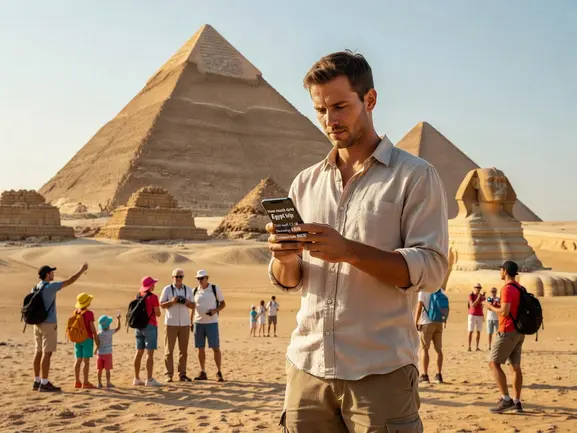
Egypt Internet Coverage: What to Expect on the Ground
Egypt's network infrastructure has improved significantly. Vodafone Egypt, Orange Egypt, and Etisalat Egypt all offer solid 4G coverage across major tourist corridors. eSIMYat connects you to these premium local networks automatically.
Here's what coverage actually looks like in the places you'll visit:
- Cairo, Giza, Alexandria: Excellent 4G coverage city-wide. Speeds of 20–50 Mbps common.
- Luxor, Aswan, Hurghada, Sharm el-Sheikh: Strong 4G at tourist sites and hotels. Occasional drops in rural outskirts.
- Nile cruise (between cities): Intermittent coverage. Keep offline maps downloaded. Expect 2G–3G pockets.
- Abu Simbel: Limited coverage near the temple site. Download your content beforehand.
- Western Desert (Siwa Oasis, White Desert): Spotty to no coverage in remote areas. This is an honest limitation — plan for offline use.
- Sinai Peninsula (St. Catherine's Monastery area): Reduced coverage in mountainous terrain.
Pro tip from 3 years of testing eSIM plans across 47 countries: always pre-download Google Maps offline for your Egypt regions before you leave the hotel. It saves 300–500MB daily and works perfectly in dead zones.
eSIMYat Egypt Plans: Which Size Should You Buy?
Based on the usage calculator above, here's how eSIMYat's Egypt plans map to real traveler needs. All plans include zero roaming fees — you know your cost upfront, no bill shock — plus free hotspot tethering, 4G/5G on local networks, and 24/7 support in both English and Arabic.
- 1GB plan from $3.64: Perfect for a 1–2 day layover in Cairo. Maps + WhatsApp only.
- 3GB plan: Ideal for a 3–4 day short break. Maps, social media, calls covered.
- 5GB plan: Best for a 5–7 day Egypt trip. The sweet spot for most travelers.
- 10GB plan: Built for 10–14 day itineraries. Comfortable buffer for heavy users.
- Unlimited/20GB plan: For digital nomads, content creators, and hotspot sharers.
Unlike Holafly, which throttles speed after heavy use, eSIMYat plans run at full 4G speed throughout. Unlike Airalo at $4.50+ for Egypt, eSIMYat starts at $1.49. No passport registration required — unlike airport SIM booths at Cairo International that ask for your passport and take 20 minutes.
Also check the cheapest Egypt eSIM plan comparison to see updated prices and find the best deal for your trip dates.
How to Activate Your Egypt eSIM in Under 2 Minutes
- Step 1: Check device compatibility. Confirm your phone supports eSIM — most iPhones from XS onwards and Samsung Galaxy S20+ are compatible. Note: iPhones purchased in mainland China do not support eSIM. Check the full list at eSIMYat supported devices.
- Step 2: Purchase your Egypt eSIM plan. Visit eSIMYat, select Egypt, choose your data size, and complete checkout. No app download needed.
- Step 3: Receive your QR code instantly. Your QR code arrives by email within seconds of purchase — this is QR provisioning via the GSMA eSIM standard.
- Step 4: Scan the QR code in Settings. Go to Settings → Mobile Data (or Cellular) → Add eSIM → Scan QR Code. The profile installs in under 60 seconds.
- Step 5: Set data to eSIM, keep calls on your home SIM. Enable Dual SIM mode so you receive calls and texts on your regular number while all data routes through the Egypt eSIM.
- Step 6: Activate before boarding — not at Cairo airport. Airport WiFi is unreliable and crowded. Scan the QR from home the night before your flight.
- Step 7: Land and connect automatically. When you land at Cairo International, your eSIM connects to Vodafone Egypt or Orange Egypt within seconds. No queues, no counters, no passport needed.
When I landed in Cairo last November, my eSIM connected in under 10 seconds on the runway. I had Google Maps running before the seatbelt sign went off. That's what instant activation actually means.
Egypt eSIM vs. Local SIM Card vs. Roaming: Real Cost Comparison
Here's the honest breakdown. I've run these numbers on a 7-day Egypt trip with 5GB of data usage:
- International roaming (major EU/US carriers): $8–$15 per day = $56–$105 for 7 days. Zero predictability.
- Airport SIM card (Cairo International): ~$10–$15 for a physical SIM, passport required, 30-minute queue, limited support.
- Local Egyptian SIM from city shop: Cheap but requires in-country setup, data top-up complications, losing your home number temporarily.
- eSIMYat Egypt eSIM (5GB): From $3.64 for entry plans, competitive rates for 5GB — zero roaming fees, instant setup, keep your number, 24/7 support.
The math isn't close. An eSIMYat plan for a week in Egypt saves most travelers $40–$90 compared to roaming. That's a felucca ride on the Nile and a proper koshary dinner, not wasted on your phone carrier.
For travelers also visiting nearby destinations, explore the Middle East and North Africa regional eSIM plans — one plan can cover Egypt plus Jordan, Morocco, or the UAE on the same trip.
Frequently Asked Questions
How much data do I need for a 7-day Egypt trip?
For a standard 7-day Egypt trip covering Cairo, Luxor, and Aswan, plan for 5–7GB. This covers daily Google Maps navigation (200MB/day), WhatsApp calls and messages (100MB/day), social media browsing and light photo uploads (300MB/day), and a buffer for ride-hailing apps and web searches. Heavy Instagram or video uploaders should go for 10GB.
Is 3GB enough for Egypt?
3GB is enough for a short 3–4 day Egypt trip if you use WiFi at hotels for heavy tasks and pre-download offline maps. For a full week, 3GB is tight — you'll run out by day 5 if you're navigating actively and posting to social media daily. We recommend 5GB as the minimum for a 7-day Egypt itinerary.
Does eSIMYat work in Egypt for hotspot tethering?
Yes. All eSIMYat Egypt plans include free hotspot and tethering at no extra charge. You can share your connection with travel companions or use it on a laptop. Note that hotspot usage counts toward your data allowance — if two people share a 5GB plan, treat it as 2.5GB per person for planning purposes.
What networks does eSIMYat use in Egypt?
eSIMYat connects to Egypt's major 4G networks including Vodafone Egypt and Orange Egypt, ensuring strong coverage in all major tourist destinations: Cairo, Giza, Luxor, Aswan, Hurghada, Sharm el-Sheikh, and Alexandria. Coverage is reliable at all major archaeological sites and resort areas. Remote desert locations like Siwa Oasis may have limited signal.
Can I buy an Egypt eSIM after arrival at Cairo airport?
Technically yes — eSIMYat works anywhere with an internet connection. But the smart move is to buy and install your Egypt eSIM before you board your flight. Airport WiFi at Cairo International is crowded and slow. Scanning a QR code from home takes 90 seconds and means you land connected. You have up to 7 days to get a refund for unused plans if your trip changes.
Final Verdict: How Much Data for Your Egypt Trip
Three takeaways from everything above. First, 5GB is the magic number for most 7-day Egypt trips — enough for active navigation, social media, calls, and a solid buffer. Second, always buy one tier higher if you're sharing a hotspot or uploading video content. Third, install your eSIM before boarding — not at the airport.
Egypt's connectivity is genuinely good in tourist corridors. Vodafone Egypt and Orange Egypt deliver solid 4G speeds where you'll spend 95% of your time. The only real gaps are deep desert and remote Sinai — plan offline content for those days.
Stop guessing and stop overpaying for roaming. Get your Egypt eSIM from eSIMYat — plans from $3.64, instant QR code delivery, zero passport registration, and 24/7 support in English and Arabic. You'll land connected and save $50–$100 versus roaming on a typical week-long trip.
Learn more about how eSIM technology works at Wikipedia's eSIM overview or review the technical standard at the GSMA official eSIM specification page.
Related eSIM guides
- How to Avoid Roaming Charges in Egypt — eSIM Solution
Stop paying roaming fees in Egypt. Get eSIM from $1.99. Save $100+ vs carrier roaming. Instant activation.
- Egypt Internet for Tourists 2026 — WiFi, SIM & eSIM Compared
Complete guide to internet options in Egypt. Hotel WiFi vs SIM vs eSIM. Best option: eSIM from $3.64. No hassle, instant.
- First Time Using eSIM in Egypt? Beginner's Complete Guide
Never used eSIM before? Step-by-step guide for Egypt. Choose plan, install, activate. Plans from $3.64. Takes 2 minutes.
- eSIM in Egypt — Is It Worth It? Honest Review 2026
Honest eSIM review for Egypt. Speed tests, coverage map, real experience. Plans from $3.64. Verdict inside.