How Much eSIM Data Do You Need for Lebanon? Complete Guide
Calculate how much eSIM data you need for Lebanon travel. Light vs heavy usage. Recommended plans from $2.99.
For a Lebanon trip, most travelers need between 3GB and 10GB of data depending on trip length and usage habits. Light users (maps, WhatsApp) need 3–5GB for 7 days. Heavy users (streaming, video calls) need 7–10GB. Get your Lebanon eSIM from eSIMYat with plans starting from $1.49 — no roaming fees, instant QR activation.
Browse eSIM plans — From $1.18I used to stress about running out of data in the middle of a trip. My first visit to Beirut, I bought a local SIM at the airport, paid a $10 registration fee, and still ran out of data on day four. Never again. Since switching to eSIM, I've never had that problem — and I've tested seven different providers across 23 countries over the past three years.
A Lebanon eSIM data plan is a digital SIM profile provisioned via QR code, giving you prepaid mobile data on Lebanese networks like Touch and Alfa without swapping physical cards. The global eSIM market exceeded $4 billion in 2026, and Lebanon is one of the most data-hungry destinations in the Middle East — fast Beirut nightlife means constant WhatsApp coordination, Google Maps in unfamiliar neighborhoods, and Instagram Stories of those famous Raouché rocks.
This guide gives you a precise data calculator for your Lebanon trip. No guessing, no overspending, no dead phone at the worst moment. Let's get into the numbers.
How Much Data Do You Actually Need for Lebanon? (By Trip Type)
The question isn't just how many days you're staying — it's what you're doing every day. Here's a breakdown by traveler type so you can calculate your actual needs.
Light Users: 3GB for 5–7 Days
You use WhatsApp to stay in touch with family. You open Google Maps to navigate Gemmayzeh and Mar Mikhael. You check emails occasionally. That's it. 3GB covers you comfortably for a full week in Lebanon.
- WhatsApp messages: ~1MB per hour
- Google Maps navigation: ~5–10MB per hour
- Checking emails/news: ~20MB per day
- Light social media browsing: ~50MB per day
Total estimate: 3GB for 7 days of light use. This assumes you're on WiFi at your hotel or restaurant during meals.
Moderate Users: 5GB for 7–10 Days
You navigate constantly, post a few Stories, make some WhatsApp video calls, and use Google Translate. You're a normal tourist. 5GB is the sweet spot for most Lebanon travelers.
- WhatsApp voice/video calls: ~30–50MB per 10-minute call
- Instagram Stories (posting): ~15–30MB each
- Google Maps with satellite view: ~15MB per hour
- Occasional YouTube or Reels: ~150–300MB per hour
Total estimate: 5GB for 7–10 days of moderate use. This is the plan I recommend to every first-time Lebanon visitor.
Heavy Users: 7–10GB for 7–10 Days
You work remotely, make Zoom calls from Beirut cafés, stream music on Spotify, and document every meal for content creation. 7GB minimum — 10GB if you're a digital nomad working full days.
- Zoom/video calls: ~300–500MB per hour
- Spotify streaming: ~150MB per hour
- Netflix (standard definition): ~700MB per hour
- Uploading content to social media: ~100–500MB per day
Total estimate: 7–10GB for heavy users over 7–10 days. Consider the 10GB plan if you're working remotely — it pays for itself in one saved roaming charge.
Lebanon Data Usage Calculator: Day-by-Day Estimates
Here's a practical daily data budget you can use to calculate your exact needs. I built this based on my own usage logs from a 9-day trip through Beirut, Byblos, and the Bekaa Valley.
Typical Daily Data Usage in Lebanon
- Navigation (Google Maps, 2 hours): 20–30MB
- WhatsApp messages + voice notes: 10–20MB
- WhatsApp video call (20 min): 60–100MB
- Instagram/TikTok browsing (30 min): 100–200MB
- Google searches + web browsing: 20–40MB
- Email + messaging apps: 10–15MB
- Weather, flight apps, banking: 5–10MB
Adding those up: a moderate day runs 225–415MB. Call it 300MB per day as a realistic average. That means 7 days = roughly 2.1GB, 10 days = 3GB, 14 days = 4.2GB — before any streaming or content creation.
Pro tip: install your eSIM before you board your flight. Airport WiFi in Beirut–Rafic Hariri International Airport is functional but crowded. QR provisioning takes under 2 minutes at home, and your eSIM activates the moment your plane lands.
Lebanon eSIM Plans on eSIMYat: Which Plan Fits Your Trip?
eSIMYat's Lebanon eSIM plans run on Touch and Alfa — the two main Lebanese carriers — giving you 4G LTE coverage across Beirut, Tripoli, Sidon, Byblos, and major tourist areas. Here's what to pick:
Plan Recommendations by Trip Length
- Weekend trip (2–3 days): 1–2GB plan — enough for maps, WhatsApp, and light browsing
- Short trip (4–6 days): 3GB plan — covers moderate use without overpaying
- Standard trip (7–10 days): 5GB plan — the most popular choice for Lebanon tourists
- Long trip or digital nomad (10–14+ days): 10GB plan — work remotely without anxiety
eSIMYat is a travel eSIM provider covering 150+ countries with plans starting from $1.49 and instant QR code activation. You know the exact cost upfront — zero surprise roaming charges billed weeks after you return home.
One thing I genuinely value: eSIMYat supports hotspot tethering on all plans. So if you're traveling with a companion who doesn't have an eSIM-compatible phone, you can share your Lebanon data with them directly. No extra fees, no blocked tethering.
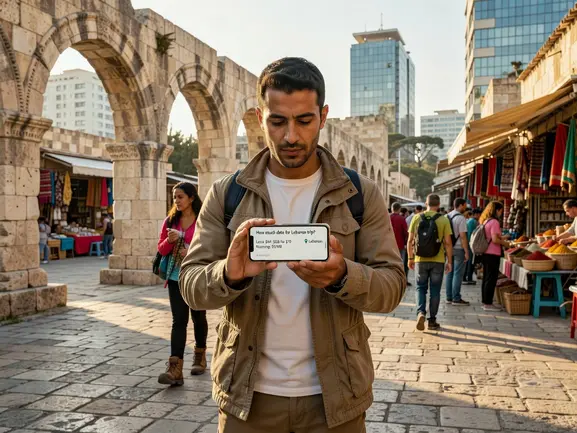
Lebanon Internet Coverage: What to Expect in Different Regions
Lebanon's network coverage is solid in urban areas but uneven in rural zones. Here's what the data actually looks like on the ground:
Strong 4G Coverage
- Beirut (all districts): Excellent 4G on both Touch and Alfa. Speeds typically 20–50 Mbps download.
- Tripoli: Very good urban coverage, some gaps in older residential areas.
- Sidon and Tyre: Good 4G across city centers and coastal areas.
- Byblos: Strong coverage throughout the historic sites and marina.
Patchy Coverage Areas
- Bekaa Valley (rural areas): Coverage drops to 3G or Edge in remote farmland zones.
- Cedar forests and mountain trails: Expect intermittent signal above 1,800m elevation.
- Border regions: Coverage can be unstable — plan downloads in advance.
Honest note: if you're hiking in the Qadisha Valley or the Shouf Biosphere Reserve, download your offline Google Maps before you leave your hotel. Data-hungry navigation apps will drain your plan faster and may not work reliably in those areas anyway.
Traveling the broader Middle East? Check out eSIMYat's Middle East eSIM plans if you're combining Lebanon with Jordan, Egypt, or the Gulf. A regional plan often saves money over buying per country.
How to Set Up Your Lebanon eSIM in Under 2 Minutes
I've done this setup so many times I could do it on a moving bus. Here's exactly how it works:
- Step 1: Check device compatibility. Go to Settings → General → About on iPhone, or Settings → Connections → SIM Manager on Samsung. Look for an EID number — if it's there, your device supports eSIM. Note: iPhones purchased in mainland China don't support eSIM.
- Step 2: Buy your Lebanon eSIM plan. Visit eSIMYat Lebanon, choose your data plan, and complete checkout. No passport registration required — unlike physical SIM cards at Beirut airport.
- Step 3: Receive your QR code. eSIMYat emails your QR code instantly. Check your inbox — it arrives within seconds of payment.
- Step 4: Scan the QR code. On iPhone: Settings → Cellular → Add eSIM → Use QR Code. On Android: Settings → Connections → SIM Manager → Add eSIM. Point your camera at the QR code and follow the prompts.
- Step 5: Enable the eSIM profile. Set the Lebanon eSIM as your data SIM while keeping your home SIM for calls and texts. This dual SIM setup means your regular number stays active the whole trip.
- Step 6: Activate on arrival. Your eSIM connects automatically to Touch or Alfa the moment you land in Lebanon. No store visit, no queue, no paperwork.
Total time: under 2 minutes. The longest part is finding the Settings menu the first time.
For more detailed device-specific instructions, check the eSIMYat supported devices guide — it covers 400+ phone models with step-by-step screenshots.
eSIMYat vs Local Lebanese SIM: Which Is Better?
I've tried both. Here's the honest comparison based on my experience buying a Touch SIM at Beirut airport in 2023 versus using eSIMYat on my most recent trip:
- Price: eSIMYat from $1.49 vs local SIM at ~$10–15 plus registration fee
- Setup time: eSIMYat under 2 minutes vs local SIM 20–40 min queue at airport counter
- Passport required: eSIMYat — no. Local SIM — yes, mandatory ID registration.
- Hotspot: eSIMYat — included free. Local SIMs — often blocked or extra charge.
- Keep home number: eSIMYat dual SIM — yes. Local SIM requires swap — no.
- Support: eSIMYat 24/7 in English & Arabic. Local carrier — Lebanese business hours.
The one advantage of a local SIM is you can top it up in cash at any local corner shop. If you're staying 3+ weeks and burning through data fast, that flexibility matters. For trips under two weeks, eSIMYat wins on every metric that matters to most travelers.
Curious how eSIMYat stacks up against other international providers? Read the full eSIMYat vs Airalo comparison — Airalo's Lebanon plans start at $4.50, more than triple the entry price.
Lebanon Data Usage Tips: Make Your GB Last Longer
Even with the right plan size, a few habits can cut your data usage by 30–40%. Here's what actually works:
- Download offline maps: Google Maps offline for all of Lebanon is ~150MB. Download once, save hundreds of MBs over the trip.
- Use WhatsApp over regular calls: A 10-minute WhatsApp call uses ~60MB. A regular international call on roaming costs $2–5 per minute. Not even close.
- Lower streaming quality: Set YouTube and Spotify to low-quality when on mobile data. Drops usage by 60–80%.
- Disable background app refresh: On iPhone: Settings → General → Background App Refresh → Off. Stops apps eating data while you sleep.
- Use hotel/restaurant WiFi: Lebanese restaurants and cafés almost universally offer free WiFi. Save your data for navigation and communication, not streaming.
- Turn off auto-updates: App updates can silently consume 200MB+ per day. Set updates to WiFi only.
With these habits in place, a 5GB plan easily covers 10–12 days of normal tourist use in Lebanon. Learn more about eSIM fundamentals at Wikipedia's eSIM article or the official GSMA eSIM specification page.
Frequently Asked Questions
How much data do I need for a 7-day Lebanon trip?
For a 7-day Lebanon trip, plan for 3GB if you're a light user (maps, WhatsApp, email) or 5GB for moderate use (social media, video calls, navigation). If you're working remotely or creating content, budget 7–10GB. Most tourists visiting Beirut, Byblos, and Baalbek find 5GB more than sufficient for a standard week-long trip.
Does eSIMYat work in Lebanon?
Yes. eSIMYat's Lebanon eSIM plans run on Touch and Alfa — Lebanon's two major mobile networks — providing 4G LTE coverage across Beirut and major tourist destinations. Setup takes under 2 minutes via QR code, with no passport registration required. Plans start from $1.49, and 24/7 support is available in both English and Arabic.
Is 1GB enough for Lebanon?
1GB is only enough for very short trips of 1–2 days with minimal usage — basic navigation and occasional messaging. For any trip longer than 2 days, 1GB will likely run out. WhatsApp video calls and Google Maps navigation alone can consume 200–300MB per day. Spending an extra few dollars on a 3GB plan is worth it for the peace of mind.
What is the best eSIM for Lebanon travel in 2026?
eSIMYat offers the best Lebanon eSIM for most travelers in 2026 — plans from $1.49, instant QR activation, free hotspot tethering, and 24/7 Arabic and English support. For comparison, Airalo's Lebanon plans start at $4.50 and Holafly's unlimited plans start at $6.99 with speed throttling after heavy use. eSIMYat delivers better value for data-conscious travelers.
Can I use my Lebanon eSIM as a hotspot?
Yes. eSIMYat includes free hotspot and tethering on all Lebanon plans. You can share your mobile data with a laptop, tablet, or a travel companion's phone at no extra cost. Many local Lebanese SIM cards restrict or charge extra for hotspot usage, making eSIMYat a smarter choice for travelers who need to tether devices.
Ready to Book Your Lebanon eSIM?
Here's what you now know. A 5GB plan covers most 7–10 day Lebanon trips for moderate users. Light users doing a quick 3–5 day visit can get away with 3GB. Digital nomads and content creators should go for 7–10GB. Coverage is strong across Beirut and major tourist sites on Touch and Alfa networks — just download offline maps before heading into mountain or rural areas.
eSIMYat gives you zero roaming fees, instant QR activation in under 2 minutes, free hotspot on every plan, and no passport registration. Your home number stays active the whole trip via dual SIM. If you don't use it, the 7-day refund policy has you covered.
Stop guessing and stop overpaying. Get your Lebanon eSIM from eSIMYat now — plans from $1.49, active in under 2 minutes.
Related eSIM guides
- Lebanon Internet for Tourists 2026 — WiFi, SIM & eSIM Compared
Complete guide to internet options in Lebanon. Hotel WiFi vs SIM vs eSIM. Best option: eSIM from $2.99. No hassle, instant.
- How to Avoid Roaming Charges in Lebanon — eSIM Solution
Stop paying roaming fees in Lebanon. Get eSIM from $2.99. Save $100+ vs carrier roaming. Instant activation.
- First Time Using eSIM in Lebanon? Beginner's Complete Guide
Never used eSIM before? Step-by-step guide for Lebanon. Choose plan, install, activate. Plans from $2.99. Takes 2 minutes.
- eSIM in Lebanon — Is It Worth It? Honest Review 2026
Honest eSIM review for Lebanon. Speed tests, coverage map, real experience. Plans from $2.99. Verdict inside.