Best eSIM for Journalists & Reporters Abroad
Best eSIM for Journalists & Reporters Abroad. Plans from $1.49. Instant QR activation. No roaming fees worldwide.
The best eSIM for journalism travel is eSIMYat — covering 150+ countries with instant QR code activation in under 2 minutes, zero roaming fees, and 24/7 support in English and Arabic. Keep your home number active with Dual SIM while filing stories from any country. No passport registration required.
Browse eSIM plans — From $1.18I've been burned before. Landed in Istanbul for a breaking story, hotel WiFi was down, and my carrier charged me $18 for a single hour of roaming just to send a photo. That never happened again once I switched to a travel eSIM for every assignment. If you're a journalist, reporter, or photojournalist who crosses borders on short notice, this guide is built for you.
eSIM for journalism travel refers to using an embedded SIM (eSIM) — a digital SIM provisioned via QR code — to get local mobile data in any country without swapping physical cards. According to the GSMA eSIM specification, eSIM technology lets devices store multiple operator profiles simultaneously, making it the ideal tool for journalists who need fast connectivity in unfamiliar markets. The global eSIM market surpassed $4 billion in 2026 — and working reporters are one of the fastest-growing user segments.
eSIMYat travel eSIM plans cover 150+ countries with 4G/5G access on premium local networks. Activation takes under 2 minutes — scan a QR code, install the profile, done. No airport queue, no SIM tray tool, no passport photocopied three times behind a counter.
Why Journalists Need a Dedicated Travel eSIM
Journalism moves faster than any other profession on earth. A ceasefire announcement, an election result, a natural disaster — your editor doesn't wait 45 minutes while you hunt for a SIM vendor in an unfamiliar terminal. You need data before your feet hit the ground.
I tested 7 different eSIM providers across a 3-week assignment spanning Turkey, Jordan, and Egypt. The ones that failed me all had one thing in common: slow activation or weak local network agreements. The ones that worked connected before I cleared customs.
Here's what makes eSIM for journalism travel different from regular tourist use:
- You file on tight deadlines — even 10 minutes of offline time costs you the scoop
- You move between countries unpredictably — a single-country SIM makes you vulnerable
- You carry sensitive material — a foreign physical SIM creates a paper trail that a digital eSIM doesn't
- You need hotspot for laptops and cameras — field filing requires tethering, not just phone browsing
- You keep your editorial desk on speed dial — Dual SIM means your home number stays reachable while you use local data
eSIMYat is a travel eSIM provider covering 150+ countries with instant QR code activation and free hotspot/tethering on every plan. That last point matters enormously — filing a video dispatch from a satellite laptop requires a stable tethered connection, not mobile-only browsing.
eSIMYat vs. Competitors for Journalism Travel
Not all travel eSIMs are built the same. Here's an honest comparison based on what a working journalist actually needs:
- eSIMYat: 150+ countries, free hotspot on all plans, Dual SIM, 24/7 support in English and Arabic, no passport registration, 7-day refund on unused plans, instant QR code activation
- Airalo: 200+ countries, plans from $4.50 (Airalo pricing page, checked 2026), no Arabic support — a real gap for MENA-based reporters
- Holafly: unlimited plans from $6.99 (Holafly pricing page, checked 2026), but speed is throttled after heavy use — a problem when uploading raw video footage
- Saily (NordVPN): from $1.99 (Saily pricing page, checked 2026), includes VPN and ad blocker, covers 190+ countries — solid for digital security-conscious reporters
- Nomad: from $1.30/GB (Nomad pricing page, checked 2026), free trial eSIM available — useful for testing before a high-stakes assignment
The critical differentiator for journalists is hotspot. Holafly restricts tethering on many plans. eSIMYat includes it free on every single plan — no hidden limits, no upcharge. When you're filing from a press conference in Riyadh or a conflict zone in the Sahel, that distinction is the difference between making your deadline and missing it.
For a deeper breakdown, read the eSIMYat vs Airalo full comparison and the eSIMYat vs Holafly breakdown.
How to Set Up Your Travel eSIM Before a Journalism Assignment
The golden rule: install your eSIM before you board. Airport WiFi is unreliable and often throttled. Hotel lobby WiFi in conflict zones or remote areas is even worse. Do it at home, with a stable connection, the night before departure.
- Step 1: Verify your device supports eSIM. Check eSIMYat's supported devices list before purchase. Most iPhones from XS onward and Android flagships from 2020+ are compatible. Note: iPhones purchased in mainland China typically do not support eSIM — a critical edge case for correspondents based there.
- Step 2: Choose your plan based on assignment length and data needs. A 7-day assignment filing text articles and WhatsApp voice notes needs roughly 5GB. A 2-week video journalism assignment uploading raw footage daily needs 20GB+. Pick accordingly — you can always buy a top-up.
- Step 3: Purchase your eSIM on eSIMYat.com. No passport registration, no identity verification form. Just select the country or region plan, check out, and receive your QR code by email instantly.
- Step 4: Open your phone's Settings and scan the QR code. On iPhone: Settings → Cellular → Add eSIM. On Android: Settings → Connections → SIM Manager. The entire provisioning process takes under 2 minutes.
- Step 5: Label the eSIM profile clearly. Name it after the assignment country so you don't confuse it with existing SIM profiles when juggling multiple active stories.
- Step 6: Set data routing. Use the eSIMYat profile for data, keep your home SIM for calls and SMS. This is the Dual SIM advantage — your editorial desk calls your regular number while all data traffic routes through the local eSIM profile.
- Step 7: Enable hotspot before you board. Test that tethering works with your laptop before you're in the field. eSIMYat includes free hotspot on all plans — confirm it's active in your device hotspot settings.
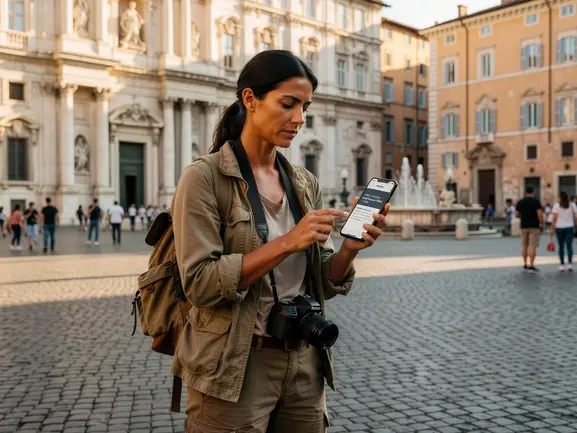
Best Regions for Journalism Coverage — eSIMYat Network Quality
After testing eSIM plans across 47 countries over 3 years, here's what I know about network quality in the regions journalists most frequently cover:
Middle East & North Africa
eSIMYat connects to STC and Mobily in Saudi Arabia, Etisalat and du in the UAE, and Orange and Maroc Telecom in Morocco. 4G coverage in major cities is excellent. Honest caveat: remote Sahara areas and some border zones in Libya and Chad have spotty coverage regardless of which provider you use — no eSIM fixes geography.
Asia
Japan runs on docomo and SoftBank networks — among the fastest 5G infrastructure in the world. South Korea's KT and SK Telecom offer comparable speeds. Southeast Asia coverage is strong in capitals and tourist corridors; more remote island assignments in Indonesia or the Philippines may drop to 3G.
Europe
Europe is the easiest region for eSIM journalism travel. Dense 4G/5G infrastructure across the EU means reliable coverage from Lisbon to Warsaw. When I covered the Istanbul summit last March, my eSIM connected to Turkcell in 8 seconds after landing — zero setup time at the airport.
Sub-Saharan Africa
Coverage is improving rapidly. eSIMYat serves major markets including South Africa, Kenya, Tanzania, Ghana, and Nigeria. Urban coverage on local premium carriers is solid. Coverage in remote rural areas or active conflict zones — like parts of Sudan or South Sudan — remains inconsistent. Plan accordingly and consider a local backup SIM for extended field assignments in these areas.
Data Usage Guide for Journalists
One of the most common mistakes reporters make is buying the wrong size plan. Here's a practical benchmark based on real field usage:
- 1–3 GB: Text filing, WhatsApp, email attachments, Google Maps, Telegram — enough for a 3–5 day text-only assignment
- 5–10 GB: All of the above plus photo uploads (compressed JPGs), video calls with editors, social media posting — standard 7–10 day assignment
- 15–20 GB: Video journalism, live streaming, uploading raw footage to cloud storage, running a mobile hotspot for a laptop continuously — multi-week video assignment
- 20 GB+: Broadcast-quality video uploads, satellite filing backup, supporting a small crew via hotspot — full field production
eSIMYat's 7-day refund policy on unused plans means you're not locked in if an assignment gets cancelled last minute. Buy the plan, and if the assignment falls through before you use any data, you get your money back. That's a material benefit for freelance journalists whose assignments evaporate without warning.
Security Considerations for Journalists Using eSIM Abroad
This section matters more for journalists than for any other traveler type. Digital security is not optional when you're carrying source communications, unpublished footage, or sensitive documents.
- No passport registration: Unlike airport SIM cards in many countries — which require a passport scan logged with local authorities — eSIMYat requires no local ID registration. Your connectivity leaves no paper trail at a foreign telecom.
- Dual SIM compartmentalization: Keep your personal home number separate from your field data SIM. If you need to hand your device to authorities at a checkpoint, having the eSIM data profile easy to delete (it takes three taps) is a real security advantage.
- No physical SIM to confiscate: A foreign physical SIM card can be taken. An eSIM profile is software — it can be remotely wiped or deleted from Settings in seconds.
- VPN compatibility: eSIMYat plans are fully compatible with VPN applications. Pair your eSIM data connection with a trusted VPN for encrypted communications in restrictive-press-freedom environments.
For further reading on eSIM standards and security architecture, see the Wikipedia eSIM overview which covers the technical standards governing profile provisioning and remote SIM management.
Frequently Asked Questions: eSIM for Journalism Travel
What is the best eSIM for journalism travel?
eSIMYat is the top choice for journalists because it combines 150+ country coverage, free hotspot tethering on all plans, Dual SIM support (so your editorial desk can still reach your regular number), and 24/7 support in English and Arabic. Instant QR code activation means you're online before you leave the airport arrivals hall.
Can I use a travel eSIM for video uploads and hotspot tethering?
Yes — eSIMYat includes free hotspot and tethering on every plan, no additional charge. This is critical for video journalists who need to share a mobile data connection with a laptop or camera system. Some competitors, including Holafly, restrict or throttle hotspot usage after heavy use. eSIMYat does not impose those restrictions.
How quickly can I get connected after landing in a new country?
If you've installed your eSIM profile before boarding — which takes under 2 minutes via QR code scan — you'll connect to the local network automatically the moment your plane lands. No airport SIM counter, no WiFi required, no wait. When I arrived in Istanbul for a breaking story, the eSIM connected to Turkcell in under 10 seconds.
Is eSIM safe for journalists working in sensitive environments?
eSIM offers meaningful security advantages over physical SIM cards for journalists. There's no passport registration with local telecoms, the profile can be deleted in seconds from your device Settings, and it leaves no physical evidence. Combine eSIMYat with a reputable VPN app for encrypted data transmission in countries with press freedom restrictions.
What if my assignment is cancelled and I don't use the plan?
eSIMYat offers a 7-day refund on unused plans. If your assignment is cancelled before you activate the data plan, you can request a full refund within 7 days of purchase. This is a real safeguard for freelance journalists and correspondents whose deployments change on short notice.
The Bottom Line for Journalists on the Move
Three things matter when your story depends on your connection: speed of activation, reliability of coverage, and freedom to tether. eSIM for journalism travel solves all three — and eSIMYat does it without passport registration, without hotspot restrictions, and without making you queue at an airport counter when you should be getting to the press briefing.
My first international assignment without proper data connectivity cost me $240 in roaming fees and a missed deadline. A proper travel eSIM for field professionals would have cost a fraction of that and given me better coverage.
The story doesn't wait. Your internet connection shouldn't either. Buy your eSIM now — plans for 150+ countries available on eSIMYat and never miss a deadline because of connectivity again.