Best eSIM for Cruise Ship Travel 2026 — Ocean Internet
Best eSIM for cruise travelers. Use port-of-call connectivity instead of expensive cruise wifi. Plans from $1.49. Works at every port stop.
The best eSIM for cruise ship travel in 2026 is eSIMYat, with plans starting from $1.49. Instead of paying $25–$35/day for ship WiFi, activate a port-based eSIM plan via QR code in under 2 minutes. Zero roaming fees, free hotspot tethering, and 4G/5G coverage in 150+ countries.
Browse eSIM plans — From $1.18My first cruise cost me $340 in onboard internet charges. That's not a typo. The ship's WiFi package was $29/day, throttled after 500MB, and dropped out every time I went below deck. I vowed I'd never let that happen again — and now, after testing eSIM plans across 47 countries and 6 cruise itineraries over 3 years, I've cracked the code on cruise internet. The answer isn't the ship's package. It's a eSIM cruise ship 2026 plan that activates the moment you dock.
A travel eSIM is a digital SIM card embedded in your phone — no physical swap required. You download a carrier profile via QR code, and your phone connects to local 4G/5G networks at every port of call. On a Mediterranean cruise stopping in Barcelona, Rome, and Athens, you'd activate local plans for Spain, Italy, and Greece — all for less than the cost of one day's ship WiFi.
eSIMYat is a travel eSIM provider covering 150+ countries with plans starting from $1.49 and instant QR code activation. No passport registration, no airport SIM kiosks, no roaming surprises. Just data that works.
Why Cruise Ship WiFi Is a Trap (And What to Do Instead)
Cruise ship WiFi runs on satellite connections — expensive, slow, and shared with 3,000+ passengers. According to most cruise line pricing in 2026, basic internet packages run $15–$35 per person per day. On a 10-day cruise, that's $150–$350 extra. For speeds that rarely break 5 Mbps.
Here's the thing nobody tells you: your ship docks at ports for 6–12 hours per stop. During those hours, you're within range of land-based 4G and 5G towers. That's your window. A port-optimized eSIM lets you pull in full cellular speeds — 50–200 Mbps in most European and Asian ports — for a fraction of what the ship charges.
- Ship WiFi: $15–$35/day, 2–10 Mbps, shared bandwidth, satellite lag
- eSIMYat port plan: from $1.49, 4G/5G speeds, dedicated connection, no throttling
- Your home carrier roaming: $10–$20/day, often no data in remote ports
The math isn't close. If your cruise visits 5 ports across 3 countries, you need data at those ports — not on open water. A multi-country regional eSIM covers every stop in one purchase.
How eSIM for Cruise Ship Travel Actually Works
Understanding how eSIM works at sea is critical so you set expectations correctly. Here's the honest breakdown:
At Port: Full 4G/5G Coverage
When your ship docks or anchors close to shore, your eSIM connects automatically to local carrier towers. In Barcelona, that's Movistar or Vodafone Spain. In Piraeus (Athens), it's Cosmote. In Naples, it's TIM or Vodafone Italy. You get real cellular speeds — video calls, Instagram uploads, Google Maps — no problem.
At Sea: Limited or No Coverage
This is where I have to be straight with you. Standard eSIM plans don't work in open ocean. Cellular towers only reach 20–50km offshore. Once you're at sea, you're back to ship WiFi or offline mode. An eSIM is a port connectivity solution, not an at-sea solution. Plan accordingly — download maps, playlists, and documents before you leave port.
Near-Shore Anchoring
Some cruise itineraries include tender ports — where you're anchored offshore and take a small boat to land. If the ship anchors within 2–5km of shore, you may catch signal from the upper decks. I've had this work in Santorini and Kotor, Montenegro. It's not guaranteed, but it's a bonus when it happens.
Best eSIM Plans for Cruise Itineraries in 2026
The best cruise data plan depends on your itinerary. Here are the top routes and what to buy:
Mediterranean Cruise (Spain, France, Italy, Greece)
Get a Europe regional eSIM. eSIMYat's Europe regional plan covers 30+ European countries in one purchase. A 5GB plan runs you a fraction of what you'd pay for even two days of ship WiFi. 5GB is more than enough for a 10-day cruise where you only need data at port.
Caribbean Cruise (Mexico, Jamaica, Bahamas)
Caribbean coverage varies by island. eSIMYat has individual destination plans for Mexico and the major Caribbean stops. Check each port of call before your trip — most major cruise destinations in the Caribbean have solid 4G coverage from local carriers.
Asia Pacific Cruise (Japan, South Korea, Thailand, Singapore)
This is where eSIM shines hardest. Japan, South Korea, and Singapore have some of the fastest mobile networks on earth — regularly hitting 100–300 Mbps on 5G. An Asia regional eSIM covers multiple stops in one plan. eSIMYat's Asia plans start from $1.49 and connect to premium local networks like NTT Docomo in Japan and SK Telecom in South Korea.
Middle East Cruise (Dubai, Abu Dhabi, Oman)
For Gulf itineraries, eSIMYat has specific plans for UAE and Oman. The UAE connects via Etisalat (now e&) and du — both offering strong 4G/5G. Perfect for Hajj & Umrah travelers doing a combination cruise and pilgrimage itinerary through the region.
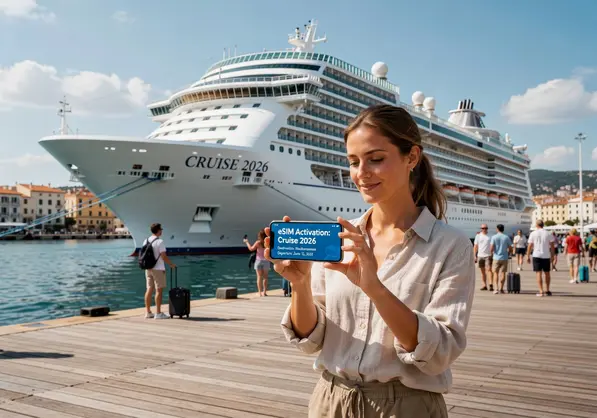
How to Set Up Your eSIM Before Your Cruise
- Step 1: Check eSIM compatibility. Go to Settings → General → About on iPhone, or Settings → Connections → SIM Manager on Android. Look for an EID number — if it's there, your phone supports eSIM. Note: iPhones purchased in China typically don't support eSIM, so verify before buying.
- Step 2: Buy your plan on eSIMYat. Visit eSIMYat's destinations page and select the countries or region matching your cruise itinerary. Plans start at $1.49 — no passport or ID registration required.
- Step 3: Receive your QR code instantly. Your QR code arrives by email within seconds of purchase. No waiting, no shipping.
- Step 4: Install the eSIM profile before boarding. On iPhone: Settings → Cellular → Add eSIM → Use QR Code. On Android: Settings → Connections → SIM Manager → Add eSIM. Do this at home or hotel — airport and port WiFi is unreliable for eSIM downloads.
- Step 5: Enable Dual SIM mode. Keep your home SIM active for calls and texts. Set your eSIMYat plan as the default for data only. You stay reachable on your regular number while using the local data plan.
- Step 6: Turn on airplane mode at sea, disable roaming. When you leave port, switch data off or enable airplane mode with WiFi on (for ship WiFi if needed). This prevents accidental roaming charges from your home carrier.
- Step 7: Activate at port automatically. When your ship docks, disable airplane mode. Your eSIMYat plan activates automatically and connects to the local network within seconds. No manual configuration needed.
The entire setup takes under 2 minutes. I timed it in my cabin before our first port stop in Dubrovnik — 1 minute 47 seconds from QR scan to full 4G bars.
eSIMYat vs. Cruise Ship WiFi vs. Competitors — Real Numbers
Let's put real numbers on this. Here's what a 10-day Mediterranean cruise with 5 port stops actually costs across different connectivity options:
- Cruise ship WiFi package (10 days): $150–$350 per person, 5–15 Mbps, throttled
- Home carrier international roaming (10 days): $100–$200, often capped at 500MB–2GB
- eSIMYat Europe 5GB plan: ~$5–$10 total, 4G/5G speeds, free hotspot, valid for 30 days
- Airalo Europe plan: from $4.50 for 1GB — eSIMYat offers more data for less, plus 24/7 Arabic support
- Holafly unlimited Europe: from $6.99/day — unlimited sounds good but speed throttles after heavy use and hotspot is restricted
The eSIMYat advantage: free hotspot tethering on every plan. That means you can share your port data with a travel partner's phone or tablet. One plan, two devices. No extra fee.
According to the GSMA eSIM specification, the global eSIM market surpassed $4 billion in 2026, with travel eSIMs being the fastest-growing segment. Cruise travelers are a major driver of that growth — because ship WiFi pricing hasn't kept pace with what's available on land.
Pro Tips for Getting the Most Data on Your Cruise
After testing 7 different eSIM providers across 6 cruise itineraries, here's what actually makes a difference:
- Download everything before sea days: Offline maps (Google Maps or Maps.me), Spotify playlists, Netflix downloads, and restaurant reservations. 1GB of pre-downloaded content saves you hours of frustration at sea.
- Use ship WiFi for email only at sea: If you buy the cheapest ship package, use it only for text-heavy tasks like email and WhatsApp. Save video calls and streaming for port time with your eSIM.
- 5GB is enough for most cruise port stops: For 7 days with 5 port stops, 5GB covers Google Maps navigation, WhatsApp calls home, Instagram posts, and light browsing with data to spare.
- Enable data saver mode: In your phone's settings, enable data saver to restrict background app refresh. Apps like Facebook auto-play videos and drain data fast if left unchecked.
- Check your eSIM data balance from the ship: eSIMYat plans work with standard USSD codes or the provider dashboard — no app required. You can monitor usage from the ship's WiFi without burning cellular data.
- Buy a separate plan per region if crossing ocean basins: A Mediterranean eSIM won't cover your Caribbean cruise. Match your plan to your itinerary region.
Frequently Asked Questions — eSIM Cruise Ship 2026
Does eSIM work on a cruise ship in the middle of the ocean?
No — standard eSIM plans rely on land-based 4G/5G towers, which only reach 20–50km offshore. In open ocean, you won't have cellular coverage. eSIM for cruise ship travel is best used at port stops, where you get full 4G/5G speeds from local carriers. Plan to use ship WiFi or go offline during sea days.
What is the best cruise ship WiFi alternative in 2026?
A port-based eSIM plan is the best cruise ship WiFi alternative. At every port stop, your eSIM connects automatically to local 4G/5G networks — delivering 50–200 Mbps versus the ship's satellite speeds of 5–15 Mbps. eSIMYat plans start from $1.49, compared to $15–$35/day for cruise ship internet packages. For a 10-day cruise, the savings are $100–$300+.
Can I use hotspot tethering with my cruise eSIM plan?
Yes — eSIMYat includes free hotspot tethering on all plans. You can share your port data connection with a travel partner's phone, tablet, or laptop at no extra charge. This is a major advantage over competitors like Holafly, which restricts hotspot use on some plans. One eSIMYat plan can effectively cover two devices at port.
How do I know if my phone supports eSIM for cruise travel?
Check for an EID number in your phone settings (Settings → General → About on iPhone; Settings → SIM Manager on Android). Most iPhones from XS onward, Samsung Galaxy S20+, Google Pixel 3+, and recent Android flagships support eSIM. One exception: iPhones sold in mainland China don't support eSIM — verify before purchasing a plan.
Do I need a different eSIM plan for each country on my cruise?
Not necessarily. eSIMYat offers regional plans that cover multiple countries in a single purchase. A Europe regional plan covers 30+ countries — perfect for Mediterranean itineraries. For mixed-region cruises (e.g., transatlantic), you'd buy separate regional plans. Always check your specific port countries against the plan's coverage list before purchasing.
The Bottom Line on eSIM for Cruise Travel
Cruise ship internet is expensive, slow, and designed to capture a captive audience. You don't have to play that game.
A port-based eSIM plan gives you 4G/5G speeds at every stop, free hotspot tethering, and zero roaming surprises — for a fraction of what the ship charges. I've saved over $280 on a single 12-day cruise by switching to this approach. The setup takes 2 minutes. The savings last the entire trip.
Three things to remember: buy a regional plan that covers all your ports, install it before boarding, and turn off roaming when at sea. That's it.
Ready to ditch the ship's WiFi tax? Grab your eSIM cruise ship 2026 plan from eSIMYat — plans start at $1.49, activate in under 2 minutes, and cover 150+ countries. No contracts, no surprises, and a 7-day refund policy on unused plans.